


I'll keep it REALLY short;

1. Water. Colonists arrived by boat, and merchant ships brought people and goods to and from Europe. Steamers ships were the first "commuter taxis" on the East Coast, ferrying folks from Boston to New York via rivers and seas. In fact, waterways were of such important to commerce, the explorers Lewis and Clark were commissioned to find an inland passage from Ocean to Ocean in 1804.
The Route 6 Connection: The Mayflower first landed on what is now the Eastern Terminus of Route 6; Provincetown, MA, before heading to the more protected harbor of Plymouth. Shipbuilding was a major industry along the shoreline towns of Route 6, and profits from whaling made New Bedford, MA a wealthy city.
 2. Railroad. Trains rendered most "commuter" obsolete - at least in the country's Eastern Corridor. In the early 1800's, rails replaced canals in the hauling of coal and lumber.
The Route 6 Connection: The first commercially successful rail transport in America, the Delaware & Hudson Gravity Railroad, which began operations on October 9, 1829, ran from Carbondale to Honesdale; both Pennsylvania Route 6 towns.

3. Automobiles. Cars = freedom. Americans were no longer constrained by water routes or rails. By the 1920's, rudimentary highways covered the United States, and by 1937, US Route 6 became the longest Federal Highway in the country. Gas stations, restaurants and motels popped up along the way to serve a continuous stream of cars and trucks. But when the Interstate Thruway system was devised and built in the 1950's and '60's, small towns along former 2-lane highways were effectively cut off from the world.
The Route 6 Connection: By the 1960's, the hundreds (if not thousands) of cars that passed through small Route 6 towns seemingly vanished overnight - opting to speed to destinations via I80 or I70. I've made it my mission to bring some attention back to these Route 6 communities.

1. Water. Colonists arrived by boat, and merchant ships brought people and goods to and from Europe. Steamers ships were the first "commuter taxis" on the East Coast, ferrying folks from Boston to New York via rivers and seas. In fact, waterways were of such important to commerce, the explorers Lewis and Clark were commissioned to find an inland passage from Ocean to Ocean in 1804.
The Route 6 Connection: The Mayflower first landed on what is now the Eastern Terminus of Route 6; Provincetown, MA, before heading to the more protected harbor of Plymouth. Shipbuilding was a major industry along the shoreline towns of Route 6, and profits from whaling made New Bedford, MA a wealthy city.
 2. Railroad. Trains rendered most "commuter" obsolete - at least in the country's Eastern Corridor. In the early 1800's, rails replaced canals in the hauling of coal and lumber.
The Route 6 Connection: The first commercially successful rail transport in America, the Delaware & Hudson Gravity Railroad, which began operations on October 9, 1829, ran from Carbondale to Honesdale; both Pennsylvania Route 6 towns.
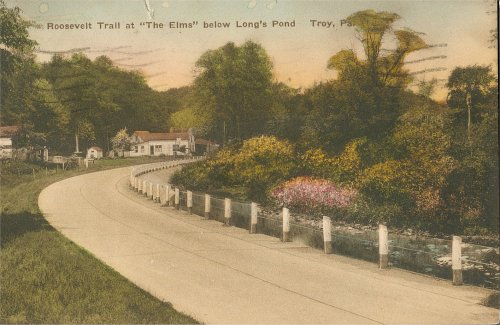
3. Automobiles. Cars = freedom. Americans were no longer constrained by water routes or rails. By the 1920's, rudimentary highways covered the United States, and by 1937, US Route 6 became the longest Federal Highway in the country. Gas stations, restaurants and motels popped up along the way to serve a continuous stream of cars and trucks. But when the Interstate Thruway system was devised and built in the 1950's and '60's, small towns along former 2-lane highways were effectively cut off from the world.
The Route 6 Connection: By the 1960's, the hundreds (if not thousands) of cars that passed through small Route 6 towns seemingly vanished overnight - opting to speed to destinations via I80 or I70. I've made it my mission to bring some attention back to these Route 6 communities.


